Hurry! Only 1 Hour Left to Save 20% on Your First Month!

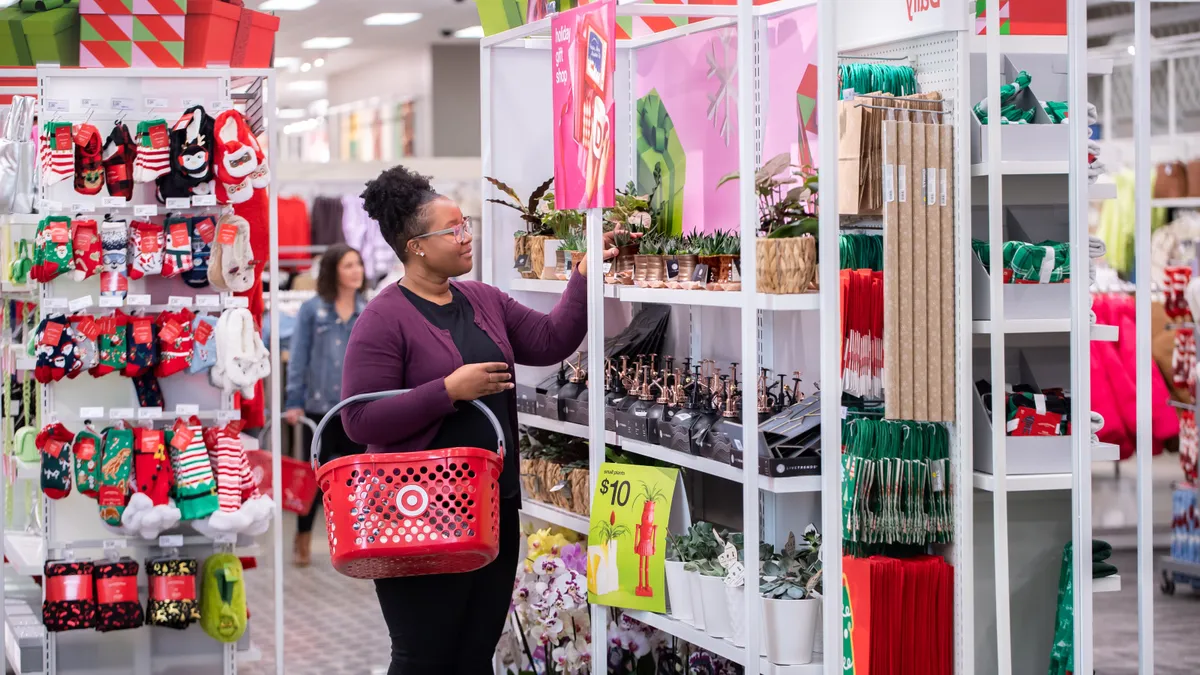

The holiday retail market in December 2025 has shifted from early-season anticipation to a full-on urgency phase, with consumers, brands, and social platforms driving the story in real time. According to the National Retail Federation (NRF), an estimated record number of shoppers — nearly 159 million — plan to hit stores and online shops on Super Saturday (the last Saturday before Christmas), up slightly from past years as gift-seekers tackle their final purchases both in-store and online. Notably, nearly half of these buyers intend to shop across channels, blending digital convenience with physical experience. Retail Dive
Across social media, trends like micro-gifting and experience-focused presents are gaining traction. In the U.K. and beyond, shoppers — especially younger cohorts — are publicly embracing smaller, thoughtful gifts that stretch budgets while fuelling shareable “unboxing” moments on platforms like TikTok and Instagram. This reflects broader shifts toward value-driven, meaningful purchases over big-ticket items. The Sun
Economic sentiment remains a powerful undercurrent shaping behavior. Recent polls show that many U.S. consumers feel squeezed by high prices on essentials, gifts, and energy, prompting delayed big buys and tighter budgeting overall. Retail commentary from the last week indicates that cost consciousness is intensifying, with shoppers turning to discount stores, experience gifting, and post-holiday sales as part of their strategy. AP News
Meanwhile, social commerce and digital discovery dominate conversation on feeds. A major trend this season: social media isn’t just inspiration — it’s purchase-driven, with millions using TikTok, Instagram, and Pinterest to find deals, product ideas, and quick service support. User-generated content and peer reviews now outweigh influencer ads in trust, pushing brands to respond personally and promptly in comments and DMs. Sprout Social
On the supply side, retailers continue to adjust. AI and real-time analytics are helping match inventory with demand faster than in previous seasons — a reflection of how tech is now deeply embedded in last-mile delivery and stocking decisions, especially with mobile shopping climbing year over year. Adobe for Business
Overall, holiday retail 2025 isn’t just about peak season anymore — it’s a multi-stage marathon, defined by tighter wallets, hybrid shopping habits, and social media’s outsized influence on discovery, trust, and buying choices. Brands that quickly adapt to shifting expectations — from omnichannel convenience to genuine social engagement — are seeing the most traction as shoppers close out the year.

Current market insights show that retail volatility is no longer a temporary condition — it’s the operating environment. As we move through mid-December, retailers are navigating rapid shifts driven by inflation fatigue, unpredictable demand spikes, and real-time social influence. Yet despite ongoing economic pressure, consumer confidence is proving more resilient than expected, particularly among shoppers who feel informed, valued, and in control of their choices.
Today’s shoppers are far more deliberate. They are not pulling back entirely — they’re scrutinizing. Across social platforms, especially TikTok, Instagram, and Reddit, conversations reveal consumers actively comparing prices, questioning value, and seeking reassurance before committing. This behavior signals a major opportunity for brands willing to lead with clarity, honesty, and proof rather than hype. Transparent pricing, realistic delivery timelines, visible reviews, and behind-the-scenes content are increasingly influential in earning trust at the moment of purchase.
Data analytics has become a decisive advantage in this environment. Retailers using real-time behavioral data — not just historical trends — are better positioned to respond to sudden surges in demand driven by viral content or last-minute gifting behavior. Predictive tools are now being used to anticipate which products will trend, which customers are likely to convert, and when promotional messaging should shift from inspiration to urgency. Personalization, when done well, no longer feels intrusive; it feels helpful.
Marketing adaptability is also separating leaders from laggards. Static campaigns planned weeks in advance are struggling to keep pace with how fast sentiment changes online. Brands that are winning right now are testing, adjusting, and responding daily — swapping creative, updating offers, and engaging directly in comments and DMs. Social commerce has blurred the line between marketing, customer service, and sales, making responsiveness a core brand value rather than a support function.
Quality remains a non-negotiable expectation. Shoppers are vocal online about disappointing products, delayed shipping, or misleading claims — and those stories travel fast. Retailers that reinforce quality through guarantees, clear product education, and consistent messaging are seeing stronger loyalty, even amid economic uncertainty.
In today’s market, success isn’t about predicting stability — it’s about operating confidently within change. Retailers that combine trust, data intelligence, and agile marketing are not just weathering volatility; they’re using it as a competitive advantage.

Emerging financial data this week is pointing to a clear shift in how retailers are managing inventory — and it’s happening fast. As we move deeper into the holiday window, the priority is no longer just having enough product on hand, but having the right product, in the right place, at the right moment. Retailers across categories are tightening their inventory strategies to align more closely with real-time demand signals rather than long-range forecasts that no longer reflect how consumers are actually shopping.
What’s driving this change is shopper selectivity. Today’s consumer isn’t browsing endlessly or impulse-buying at scale. They are purposeful, price-aware, and quick to move on if availability doesn’t match expectations. That makes excess inventory a costly liability — not just financially, but operationally. Carrying the wrong mix ties up cash, increases markdown pressure, and erodes margins at the very moment retailers need flexibility most.
Retailers that are outperforming right now are leaning into data-led inventory decisions, using sell-through rates, search behavior, and social signals to guide replenishment in near real time. Instead of pushing inventory into channels and hoping demand follows, they’re letting demand lead the conversation. This shift is especially critical as holiday shopping compresses into shorter, more intense bursts driven by promotions, shipping cutoffs, and viral product moments.
Equally important is how inventory is balanced across channels. The divide between online and brick-and-mortar inventory continues to blur, but execution still matters. Consumers expect consistency — if a product appears available online, they assume it can be fulfilled quickly, whether that means ship-to-home, buy-online-pick-up-in-store, or same-day delivery. Retailers that treat stores as fulfillment assets, not just sales floors, are expanding reach without overextending stock.
Operational efficiency is the hidden win here. Smarter inventory alignment reduces last-minute scrambling, lowers return risk, and improves customer satisfaction — all while protecting margins during peak demand. Retailers that can pivot inventory quickly, reallocate between locations, and respond to sudden demand spikes are far better positioned to capture holiday spend without carrying excess into the new year.
The takeaway is simple: inventory discipline is now a growth strategy. Retailers that stay responsive, connected to demand signals, and flexible across channels are setting themselves up not just for a stronger holiday finish, but for a cleaner, more profitable start to the year ahead.

The beauty industry is seeing a renewed surge in momentum, and this isn’t a trend driven by novelty or flash. What we’re seeing now is a values-led renaissance, where self-care, health, and wellness are becoming essential purchases rather than discretionary indulgences. Consumers are prioritizing products that make them feel better — physically and emotionally — and they are increasingly thoughtful about what goes on their bodies and where it comes from.
Recent retail and social data show shoppers gravitating toward brands that clearly communicate ingredient integrity, ethical sourcing, and sustainability practices. Clean formulations, refillable packaging, cruelty-free testing, and transparent labeling are no longer niche differentiators — they are fast becoming baseline expectations. On social platforms, product discovery is being driven less by celebrity endorsements and more by peer validation, education, and authenticity. Consumers want to understand why a product works, not just what it promises.
This shift is influencing purchasing behavior across demographics. Wellness-focused beauty is resonating with younger consumers who are values-driven, while older shoppers are engaging with products that support skin health, longevity, and overall well-being. The common thread is trust. Brands that are clear about ingredients, sourcing, and impact are earning repeat purchases, while those that rely on vague claims are being questioned — publicly — in reviews and comment sections.
For retailers, this presents a clear opportunity. Featuring wellness-oriented beauty products more prominently — both in-store and online — aligns assortments with current shopper priorities. But placement alone isn’t enough. Retailers seeing the strongest performance are pairing product visibility with story-driven merchandising: signage that explains benefits, digital content that educates, and in-store experiences that invite discovery rather than overwhelm.
Storytelling matters here because values drive loyalty. When shoppers connect with a brand’s mission — whether that’s sustainability, inclusivity, or ingredient transparency — they are more likely to stay engaged beyond a single purchase. This loyalty is particularly valuable in beauty, where replenishment cycles are frequent, and brand switching is common unless a deeper connection is established.
The takeaway is straightforward: beauty retail right now is about alignment, not amplification. Retailers that curate thoughtfully, communicate clearly, and support brands that stand for something meaningful are not only capturing current demand — they’re building long-term customer relationships in a category where trust is the ultimate currency.

General merchandise is undergoing a meaningful reset, and the common thread right now is experience over excess. Retailers are no longer competing on assortment alone — they’re competing on how easily, enjoyably, and confidently customers can shop across channels. In today’s environment, where consumers are time-constrained and value-focused, the retailers winning share are those that remove friction and add relevance at every touchpoint.
We’re seeing a clear pivot toward blended physical and digital experiences. Shoppers expect the convenience of online discovery paired with the immediacy of in-store fulfillment. That means stores are evolving into experience hubs — places to explore products, validate decisions, and complete purchases quickly. Retailers that have invested in consistent pricing, real-time inventory visibility, and flexible fulfillment options are closing gaps that once caused shoppers to abandon carts or walk out empty-handed.
Personalization is playing a bigger role than ever, especially during high-stakes shopping periods. Generic promotions are losing impact. Instead, retailers are leveraging loyalty data and behavioral insights to deliver targeted offers that feel timely and useful. Whether it’s app-based discounts, personalized email promotions, or exclusive in-store perks, shoppers respond when the message feels curated rather than mass-market.
In-store events are also making a quiet comeback — not as large productions, but as focused, experience-driven moments. Limited-time demonstrations, seasonal launches, and member-only shopping hours are proving effective at driving foot traffic without heavy discounting. These events give shoppers a reason to visit beyond price and create a sense of urgency that digital channels alone can’t replicate.
Merchandising strategy matters here. Product bundles and seasonal groupings are resonating strongly with consumers looking for convenience and perceived value. Thoughtfully curated bundles reduce decision fatigue and increase basket size, particularly in general merchandise categories where choice overload can stall purchases. Retailers that guide shoppers toward “ready-to-go” solutions are seeing higher conversion rates both online and in-store.
The unifying goal across all of this is a seamless shopping journey. Customers don’t think in terms of channels — they think in terms of outcomes. They want to find what they need quickly, feel confident in the purchase, and trust that the retailer will deliver on expectations. When that happens, conversion improves, loyalty strengthens, and repeat visits follow.
The takeaway for general merchandise retailers is clear: experience is now a growth lever. Those who connect personalization, smart merchandising, and channel integration into one cohesive strategy are not just driving short-term sales — they’re building lasting customer relationships in an increasingly competitive landscape.
TikTok continues to reshape the retail landscape, and its influence on purchase decisions is no longer emerging — it’s established. What’s changing now is how deeply consumers rely on social platforms as their primary discovery engine. For a growing segment of shoppers, TikTok isn’t just entertainment; it’s search, reviews, recommendations, and validation rolled into one.
Today’s consumers are turning to short-form video to answer real shopping questions: Is this worth it? Does it actually work? How does it fit into my life? These moments of discovery often happen before a shopper ever visits a retailer’s website or steps into a store. That makes social engagement not a “nice to have,” but a core driver of demand. Brands that are absent from these conversations are effectively invisible during the most influential stage of the purchase journey.
What’s resonating right now is authentic, unscripted content. Polished ads are struggling to hold attention, while real demonstrations, honest reactions, and behind-the-scenes storytelling are gaining traction. Shoppers want to see products in use, in real environments, by people they relate to. Entertainment matters, but credibility matters more. Content that feels helpful, surprising, or genuinely entertaining is far more likely to convert than content that feels promotional.
Influencer collaboration remains a powerful accelerant — but the strategy is evolving. Mega-influencers aren’t always the most effective. Retailers are seeing stronger engagement and conversion from creators who align closely with specific demographics or lifestyle niches. These creators feel more trustworthy, and their audiences are more likely to act on recommendations. The focus has shifted from reach alone to relevance and resonance.
For retailers, the implication is clear: social platforms must be treated as active retail channels, not just marketing outlets. This means responding to comments, engaging in conversations, and adapting content quickly as trends shift. TikTok trends move fast, and brands that can react in days — not weeks — are the ones staying visible.
Understanding where attention is moving allows retailers to allocate marketing spend more effectively. Social platforms now influence not just awareness, but timing, urgency, and final decision-making. When a product gains traction on TikTok, demand can spike overnight — and retailers that are prepared operationally can capture that momentum instead of missing it.
The takeaway is simple: TikTok isn’t changing retail — it is retail. Brands and retailers that lean into authentic content, creator partnerships, and agile social strategies are expanding reach, accelerating conversion, and building relevance with the consumers shaping today’s market.

The apparel sector — particularly activewear — is experiencing a noticeable realignment as consumers push back on price inflation and brand fatigue. Women shoppers, in particular, are reassessing value in the athletic category, and that shift is beginning to show up clearly in market share movement. Premium positioning alone is no longer enough to justify premium pricing.
Recent consumer conversations and purchasing patterns indicate that Fabletics is gaining momentum, increasingly challenging long-dominant players like Lululemon while pulling share from Athleta. The appeal is straightforward: comparable style and performance at a price point that feels more reasonable in today’s economic climate. Shoppers are signaling that they still want quality, but they are less willing to overpay for branding when alternatives deliver similar functionality and design.
Lululemon remains a category leader, but sentiment is shifting. A growing number of consumers view its pricing as overinflated, especially as competitors narrow the gap on fabric innovation, fit, and durability. Meanwhile, Athleta — once well-positioned at the intersection of performance and accessibility — is facing increased pressure as value-driven brands sharpen their offerings and messaging.
What’s resonating right now is versatility and perceived fairness. Retailers like Fabletics are leaning into inclusive sizing, lifestyle-forward designs, and membership-based value propositions that make shoppers feel rewarded rather than extracted from. This aligns closely with broader apparel trends favoring multi-use garments that transition from workout to everyday wear without sacrificing comfort or style.
Social proof is amplifying this shift. Customer reviews, try-on videos, and real-world testimonials are heavily influencing athleticwear purchases. Shoppers are comparing brands openly — often side by side — and sharing honest feedback about fit, longevity, and cost-per-wear. Brands that surface this feedback transparently are building trust faster than those relying on polished brand narratives alone.
For retailers operating in or adjacent to the athletic category, the takeaway is clear: value perception now drives loyalty. Consumers aren’t abandoning premium outright, but they are demanding justification. Retailers that balance performance, price discipline, and authenticity — while clearly communicating why their product earns its price — are the ones capturing share as competition intensifies.

As holiday shopping accelerates, the toys and games category is once again emerging as a bellwether for consumer mood. Despite economic pressure and cautious spending behavior, toys remain one of the most emotionally driven purchases of the season. What we’re seeing right now is a meaningful uptick in in-store foot traffic, particularly from families who want to see, touch, and compare products before buying — especially for younger children.
Recent retail data pulses show that stores are becoming destination points again for toy discovery. Parents and grandparents are actively seeking out the season’s most talked-about items, from classic board games and creative play kits to licensed characters and STEM-focused toys. Social media and word-of-mouth continue to influence what ends up on shopping lists, but the final decision is often made in-store, where availability and presentation matter most.
That said, this isn’t a “buy at any cost” environment. While the holiday atmosphere is undeniably festive, consumers are balancing joy with realism. Price sensitivity remains high, and shoppers are more selective about what makes the cut. This puts pressure on retailers to align inventory tightly with demand signals. Overbuying risks heavy markdowns after the holidays, while underbuying can result in missed sales during peak weeks when urgency is highest.
Retailers performing well in toys right now are leaning into smart assortment strategies. They’re prioritizing proven sellers, clearly labeling age ranges and price points, and using endcaps or featured displays to reduce decision fatigue. Bundles and value-driven multi-pack offerings are also resonating, particularly for families shopping for multiple children or classrooms.
Operational planning is critical during this window. Stores must be prepared for uneven demand spikes driven by viral moments, weather-related traffic shifts, and last-minute gifting behavior. Flexible replenishment, strong communication between stores and distribution, and clear visibility into sell-through rates are essential to staying responsive without overextending inventory.
Looking beyond the immediate rush, sustainability remains part of the conversation — even in toys. Shoppers are paying more attention to durability, reusability, and educational value. Retailers that highlight these attributes are not only supporting holiday sales but also reinforcing trust that carries into the new year.
The takeaway for retailers is clear: toys and games offer a powerful seasonal opportunity, but success depends on discipline as much as enthusiasm. With thoughtful inventory planning, clear merchandising, and an eye on both joy and value, retailers can capture holiday demand while protecting margins and long-term brand health.
Marci Cowart is a senior retail intelligence analyst at Hey Sage Life, guiding retailers through complex market dynamics and consumer trends.
Editorial Note: All sections are human-edited for accuracy and tone.
"Focus on delivering value and clarity in a complex retail landscape."
— Marci
Continue exploring today’s reflections across our community of creators: